Menu
  • Home
  • Staff
  • Services
  • New Patients
  • Our Offices
    • Decatur Office
    • Atlanta Office
  • Contact Us
  • Appointment Request
  • Patient Education
    • Bone/Joint/Tendon
      • Accessory Navicular Syndrome
      • Achilles Tendon Rupture
      • Ankle
        • Ankle Arthritis
        • Ankle Fractures
        • Ankle Pain
        • Ankle Sprain
        • Swollen Ankles
        • Tarsal Coalition
        • Tarsal Tunnel Syndrome
        • Weak Ankles
      • Arch Pain
      • Arch Supports
      • Bone Healing
      • Bone Infection
      • Bone Tumors in the Foot
      • Brachymetatarsia
      • Bunions (Hallux Abducto Valgus)
      • Bursitis
      • Calcaneal Apophysitis (Sever's Disease)
      • Calf Pain
      • Capsulitis of the Second Toe
      • Cavus Foot (High-Arched Foot)
      • Charcot Foot
      • Chronic Ankle Instability
      • Clubfoot
      • Cold Feet
      • Common Disorders of the Achilles Tendon
      • Drop Foot
      • DVT (Deep Vein Thrombosis)
      • Extra Bones
      • Fallen Arches
      • Fifth Metatarsal Fracture
      • Flatfoot
        • Flatfoot-Adult Acquired
        • Flatfoot-Flexible
        • Flatfoot-Pediatric
      • Foot Arthritis
      • Foot Drop
      • Fracture
        • Foot Fracture
        • Fracture-Ankle
        • Fracture-Foot
        • Fractures of the Calcaneus (Heel Bone Fractures)
        • Fractures of the Fifth Metatarsal
        • Fracture-Toe
        • Jones Fracture
        • Stress Fracture in the Foot
        • Toe and Metatarsal Fractures (Broken Toes)
      • Gangrene
      • Gout
      • Haglund's Deformity
      • Hallux Rigidus
      • Hammertoes
      • Heel Pain (Plantar Fasciitis)
      • High-Arched Foot
      • Intermetatarsal Neuroma
      • Intoeing
      • Joint Pain in the Foot
      • Joint Swelling in the Foot
      • Lisfranc Injuries
      • Os Trigonum Syndrome
      • Osteoarthritis of the Foot and Ankle
      • Osteomyelitis (Bone Infection)
      • Osteopenia
      • Osteoporosis
      • Peroneal Tendon Injuries
      • Pigeon-toes
      • Posterior Tibial Tendon Dysfunction (PTTD)
      • R.I.C.E Protocol
      • Restless Legs
      • Rheumatoid Arthritis in the Foot and Ankle
      • Sesamoid Injuries in the Foot
      • Shin Splints
      • Swollen Feet
      • Synovitis
      • Tailor's Bunion
      • Talar Dome Lesion
      • Tingly Feet
      • Tired Feet
      • Toe Walking
      • Turf Toe
      • Varicose Veins
      • Webbed Toes
    • Nails and Skin
      • Athlete's Foot
      • Black Toenails
      • Callus
      • Contact Dermatitis
      • Corns
      • Cracked Heels
      • Dermatitis
      • Dry Heels
      • Eczema of the Foot
      • Foot Bumps
      • Foot Lumps
      • Foot Odor
      • Foot Rash
      • Frostbite
      • Fungal Nails
      • Ganglion Cyst
      • Heel Fissures
      • Inflammation: Acute
      • Ingrown Toenails
      • Malignant Melanoma of the Foot
      • Plantar Fibroma
      • Plantar Wart (Verruca Plantaris)
      • Pump Bump (Hallux Rigidus)
      • Puncture Wounds
      • Rash
      • Raynauds Phenomenon
      • Skin Cancer of the Foot and Ankle
      • Smelly Feet
      • Sweaty Feet
      • Thick Toenails
      • Warts
      • White Toenails
      • Wounds/Ulcers
      • Wounds-Puncture
      • Yellow Toenails
    • Diabetic Health
      • Diabetic Complications and Amputation Prevention
      • Diabetic Foot Care Guidelines
      • Diabetic Peripheral Neuropathy
      • Diabetic Shoes
      • MRSA Infection of the Foot
      • Peripheral Arterial Disease (P.A.D.)
      • Soft Tissue Biopsy
    • Fitness and Your Feet
      • Baseball Injuries to the Foot and Ankle
      • Basketball Injuries to the Foot and Ankle
      • Field Hockey Injuries to the Foot and Ankle
      • Football Injuries to the Foot and Ankle
      • Golf Injuries to the Foot and Ankle
      • Lacrosse Injuries to the Foot and Ankle
      • Rugby Injuries to the Foot and Ankle
      • Running and Track Injuries to the Foot and Ankle
      • Soccer Injuries to the Foot and Ankle
      • Softball Injuries to the Foot and Ankle
      • Tennis Injuries to the Foot and Ankle
      • Volleyball Injuries to the Foot and Ankle
    • Orthotics and Footwear
      • Custom Orthotic Devices
      • Orthotics
      • Shoe Inserts
    • Compartment Syndrome
    • Deep Vein Thrombosis (DVT)
    • Equinus
    • Instructions for Using Crutches
    • Staph Infections of the Foot
  • Educational Videos
  • Blog

Decatur Office

404-284-7744

Atlanta Office

404-755-2291

  • Home >
  • Articles >
  • Orthotics & Footwear >
  • High Heels

High Heels

  • Created in Orthotics & Footwear

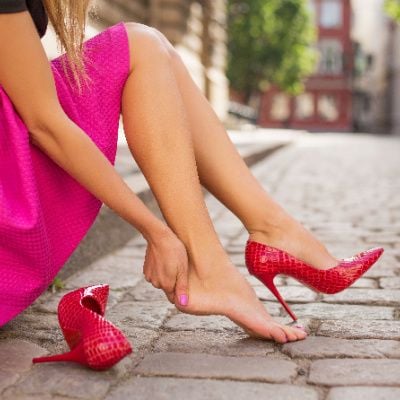
Though synonymous with elegance, high heels can exact a toll on foot health. This article delves into the intricate relationship between fashionable footwear and common foot problems, providing insights into the impact of high heels on our feet and practical tips for mitigating associated issues.

A Fashionable Dilemma

High heels have long been a staple in the fashion world, accentuating posture and adding a touch of sophistication. However, the very allure of these elevated shoes can lead to a range of foot problems, prompting a closer examination of the consequences.

How High Heels Affect the Feet

  1. Shifted Center of Gravity: The elevation of the heel tilts the body forward, altering the natural alignment and placing increased pressure on the ball of the foot.
  2. Toe Compression and Deformation: Pointed toes and cramped spaces within high-heeled shoes can contribute to conditions like bunions, hammertoes, and ingrown toenails.
  3. Achilles Tendon Strain: The raised heel places the Achilles tendon in a shortened position, potentially leading to strain and discomfort.

Common Foot Problems Caused by High Heels

  1. Bunions: The pressure exerted on the big toe joint can cause it to deviate, resulting in the development of a bony bump known as a bunion.
  2. Hammertoes: The unnatural bending of the toes in high heels can contribute to the development of hammertoes, where the toes take on a claw-like appearance.
  3. Metatarsalgia: Increased pressure on the ball of the foot can lead to metatarsalgia, causing pain and inflammation in this area.

Impact on Posture and Muscles

  1. Lower Back Pain: The altered posture induced by high heels can affect the spine's alignment, leading to lower back pain.
  2. Muscle Fatigue: The calf muscles and those in the lower leg may experience increased fatigue due to the constant adjustment required to maintain balance.

Prevention and Mitigation

  1. Choosing Heel Heights Wisely: Opting for lower heel heights can significantly reduce the strain on the feet and lower extremities.
  2. Incorporating Orthopedic Inserts: Customized inserts can provide additional support and cushioning, mitigating the impact of high heels.
  3. Foot-Strengthening Exercises: Engaging in exercises that strengthen the foot muscles can enhance their resilience to the stresses imposed by high heels.

Alternatives to High Heels - Fashion Meets Comfort

Exploring footwear options that seamlessly blend style with comfort is essential. From stylish flats to supportive wedges, the market offers alternatives that prioritize foot health without compromising fashion.

The Importance of Regular Foot Check-ups

Regular visits to a podiatrist can help detect and address foot problems early on. Monitoring foot health is especially crucial for those who frequently wear high heels.

Conclusion

In conclusion, while high heels undoubtedly add a dash of glamour, it's essential to be mindful of their potential impact on foot health. By making informed choices, incorporating preventive measures, and embracing footwear alternatives, individuals can navigate the fashion landscape while safeguarding the well-being of their feet. After all, true elegance is not just about style but also about striding confidently to maintain healthy, happy feet.

Disclaimer:
The information on this website is provided for educational and information purposes only and is not medical advice. Always consult with a licensed medical provider and follow their recommendations regardless of what you read on this website. If you think you are having a medical emergency, dial 911 or go to the nearest emergency room. Links to other third-party websites are provided for your convenience only. If you decide to access any of the third-party websites, you do so entirely at your own risk and subject to the terms of use for those websites. Neither Dr. Jimmy Gregory, nor any contributor to this website, makes any representation, express or implied, regarding the information provided on this website or any information you may access on a third-party website using a link. Use of this website does not establish a doctor-patient relationship. If you would like to request an appointment with a health care provider, please call our office at 404-284-7744.

  • What is a Podiatrist?
  • When To Call a Doctor
  • Foot Anatomy
  • Ball/Joint/Tendon
  • Diabetic Health
  • Nails & Skin
  • Fitness and Your Feet
  • Orthotics & Footwear

Decatur Office

Monday:

Closed

Tuesday:

9:00 am-12:00 pm

Wednesday:

1:00 pm-4:00 pm

Thursday:

1:00 pm-4:00 pm

Friday:

Closed

Saturday:

Closed

Sunday:

Closed

Atlanta Office

Monday:

1:00 pm-4:00 pm

Tuesday:

Closed

Wednesday:

9:00 am-11:00 pm

Thursday:

9:00 am-11:00 pm

Friday:

Closed

Saturday:

Closed

Sunday:

Closed

404-284-7744

No social media links found. Please configure it
Locations
Appointment Request
No social media links found. Please configure it
  • Copyright © 2026 MH Sub I, LLC dba Officite
  • Admin Log In
  • Site Map