Menu
  • Home
  • Staff
  • Services
  • New Patients
  • Our Offices
    • Decatur Office
    • Atlanta Office
  • Contact Us
  • Appointment Request
  • Patient Education
    • Bone/Joint/Tendon
      • Accessory Navicular Syndrome
      • Achilles Tendon Rupture
      • Ankle
        • Ankle Arthritis
        • Ankle Fractures
        • Ankle Pain
        • Ankle Sprain
        • Swollen Ankles
        • Tarsal Coalition
        • Tarsal Tunnel Syndrome
        • Weak Ankles
      • Arch Pain
      • Arch Supports
      • Bone Healing
      • Bone Infection
      • Bone Tumors in the Foot
      • Brachymetatarsia
      • Bunions (Hallux Abducto Valgus)
      • Bursitis
      • Calcaneal Apophysitis (Sever's Disease)
      • Calf Pain
      • Capsulitis of the Second Toe
      • Cavus Foot (High-Arched Foot)
      • Charcot Foot
      • Chronic Ankle Instability
      • Clubfoot
      • Cold Feet
      • Common Disorders of the Achilles Tendon
      • Drop Foot
      • DVT (Deep Vein Thrombosis)
      • Extra Bones
      • Fallen Arches
      • Fifth Metatarsal Fracture
      • Flatfoot
        • Flatfoot-Adult Acquired
        • Flatfoot-Flexible
        • Flatfoot-Pediatric
      • Foot Arthritis
      • Foot Drop
      • Fracture
        • Foot Fracture
        • Fracture-Ankle
        • Fracture-Foot
        • Fractures of the Calcaneus (Heel Bone Fractures)
        • Fractures of the Fifth Metatarsal
        • Fracture-Toe
        • Jones Fracture
        • Stress Fracture in the Foot
        • Toe and Metatarsal Fractures (Broken Toes)
      • Gangrene
      • Gout
      • Haglund's Deformity
      • Hallux Rigidus
      • Hammertoes
      • Heel Pain (Plantar Fasciitis)
      • High-Arched Foot
      • Intermetatarsal Neuroma
      • Intoeing
      • Joint Pain in the Foot
      • Joint Swelling in the Foot
      • Lisfranc Injuries
      • Os Trigonum Syndrome
      • Osteoarthritis of the Foot and Ankle
      • Osteomyelitis (Bone Infection)
      • Osteopenia
      • Osteoporosis
      • Peroneal Tendon Injuries
      • Pigeon-toes
      • Posterior Tibial Tendon Dysfunction (PTTD)
      • R.I.C.E Protocol
      • Restless Legs
      • Rheumatoid Arthritis in the Foot and Ankle
      • Sesamoid Injuries in the Foot
      • Shin Splints
      • Swollen Feet
      • Synovitis
      • Tailor's Bunion
      • Talar Dome Lesion
      • Tingly Feet
      • Tired Feet
      • Toe Walking
      • Turf Toe
      • Varicose Veins
      • Webbed Toes
    • Nails and Skin
      • Athlete's Foot
      • Black Toenails
      • Callus
      • Contact Dermatitis
      • Corns
      • Cracked Heels
      • Dermatitis
      • Dry Heels
      • Eczema of the Foot
      • Foot Bumps
      • Foot Lumps
      • Foot Odor
      • Foot Rash
      • Frostbite
      • Fungal Nails
      • Ganglion Cyst
      • Heel Fissures
      • Inflammation: Acute
      • Ingrown Toenails
      • Malignant Melanoma of the Foot
      • Plantar Fibroma
      • Plantar Wart (Verruca Plantaris)
      • Pump Bump (Hallux Rigidus)
      • Puncture Wounds
      • Rash
      • Raynauds Phenomenon
      • Skin Cancer of the Foot and Ankle
      • Smelly Feet
      • Sweaty Feet
      • Thick Toenails
      • Warts
      • White Toenails
      • Wounds/Ulcers
      • Wounds-Puncture
      • Yellow Toenails
    • Diabetic Health
      • Diabetic Complications and Amputation Prevention
      • Diabetic Foot Care Guidelines
      • Diabetic Peripheral Neuropathy
      • Diabetic Shoes
      • MRSA Infection of the Foot
      • Peripheral Arterial Disease (P.A.D.)
      • Soft Tissue Biopsy
    • Fitness and Your Feet
      • Baseball Injuries to the Foot and Ankle
      • Basketball Injuries to the Foot and Ankle
      • Field Hockey Injuries to the Foot and Ankle
      • Football Injuries to the Foot and Ankle
      • Golf Injuries to the Foot and Ankle
      • Lacrosse Injuries to the Foot and Ankle
      • Rugby Injuries to the Foot and Ankle
      • Running and Track Injuries to the Foot and Ankle
      • Soccer Injuries to the Foot and Ankle
      • Softball Injuries to the Foot and Ankle
      • Tennis Injuries to the Foot and Ankle
      • Volleyball Injuries to the Foot and Ankle
    • Orthotics and Footwear
      • Custom Orthotic Devices
      • Orthotics
      • Shoe Inserts
    • Compartment Syndrome
    • Deep Vein Thrombosis (DVT)
    • Equinus
    • Instructions for Using Crutches
    • Staph Infections of the Foot
  • Educational Videos
  • Blog

Decatur Office

404-284-7744

Atlanta Office

404-755-2291

  • Home >
  • Articles >
  • Nails & Skin >
  • Pedicures

Pedicures

  • Created in Nails & Skin

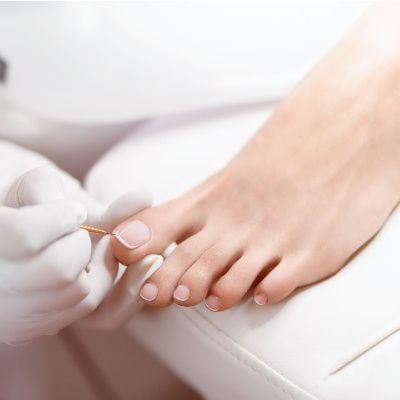
Pedicures, often associated with pampering and aesthetics, offer more than just a cosmetic makeover for your feet. Beyond the indulgence of polished nails and soft skin, regular pedicures provide a range of health benefits that contribute to overall foot wellness. In this exploration, we unravel pedicures' surprising advantages, emphasizing the importance of incorporating these foot care rituals into your self-care routine.

Enhanced Nail Health

At the core of any pedicure is nail care. Trimming, shaping, and cleaning the toenails improve their appearance and contribute to overall nail health. Regular maintenance helps prevent ingrown toenails, fungal infections, and other issues from neglecting proper nail care.

Callus and Corn Prevention

The formation of calluses and corns, often due to friction and pressure on the feet, can be effectively managed through pedicures. The gentle removal of dead skin during the exfoliation process helps prevent the build-up of these rough patches, promoting smoother, more comfortable feet.

Improved Circulation

The massage component of a pedicure is more than just a relaxing experience. It stimulates blood circulation in the feet, aiding in delivering oxygen and nutrients to the tissues. Enhanced circulation contributes to reduced swelling, faster healing, and an overall sense of foot vitality.

Stress Relief and Relaxation

Beyond the physical benefits, the relaxation achieved during a pedicure has notable mental health advantages. The calming effects of the massage, warm water soak, and overall pampering contribute to stress reduction and improved mental well-being.

Early Detection of Foot Issues

Regular pedicures involve a close inspection of the feet by a trained professional. This allows for the early detection of potential issues such as fungal infections, warts, or other abnormalities. Timely identification enables proactive measures, preventing the escalation of minor concerns into more significant problems.

Moisturization and Hydration

The skin on our feet is susceptible to dryness and cracking, especially in areas with less natural moisture. Pedicures involve moisturization and hydration techniques that address these concerns, leaving the skin soft and supple. Well-hydrated skin is more resistant to issues like fissures and infections.

Stress on Joints and Muscles

A pedicure's massaging and soaking components relieve tired and achy muscles. This is particularly beneficial for individuals who spend prolonged periods on their feet. By alleviating tension and stress on joints and muscles, pedicures contribute to enhanced mobility and comfort.

Choosing the Right Pedicure

Choosing the right type for your needs is essential to maximize the health benefits of pedicures. Basic pedicures, spa pedicures, and medical pedicures cater to different requirements, with the latter often addressing specific foot health issues under the guidance of a podiatrist.

Conclusion

In conclusion, pedicures offer a holistic approach to foot care, combining aesthetic enhancements with many health benefits. Beyond the visual appeal, these treatments contribute to nail health, circulation, stress relief, and early issue detection. Integrating regular pedicures into your self-care routine is a proactive step towards maintaining happy, healthy feet that support your overall well-being. So, the next time you consider a pedicure, remember that you're not just treating your feet to a beauty makeover – you're investing in their long-term health and vitality.

Disclaimer:
The information on this website is provided for educational and information purposes only and is not medical advice. Always consult with a licensed medical provider and follow their recommendations regardless of what you read on this website. If you think you are having a medical emergency, dial 911 or go to the nearest emergency room. Links to other third-party websites are provided for your convenience only. If you decide to access any of the third-party websites, you do so entirely at your own risk and subject to the terms of use for those websites. Neither Dr. Jimmy Gregory, nor any contributor to this website, makes any representation, express or implied, regarding the information provided on this website or any information you may access on a third-party website using a link. Use of this website does not establish a doctor-patient relationship. If you would like to request an appointment with a health care provider, please call our office at 404-284-7744.

  • What is a Podiatrist?
  • When To Call a Doctor
  • Foot Anatomy
  • Ball/Joint/Tendon
  • Diabetic Health
  • Nails & Skin
  • Fitness and Your Feet
  • Orthotics & Footwear

Decatur Office

Monday:

Closed

Tuesday:

9:00 am-12:00 pm

Wednesday:

1:00 pm-4:00 pm

Thursday:

1:00 pm-4:00 pm

Friday:

Closed

Saturday:

Closed

Sunday:

Closed

Atlanta Office

Monday:

1:00 pm-4:00 pm

Tuesday:

Closed

Wednesday:

9:00 am-11:00 pm

Thursday:

9:00 am-11:00 pm

Friday:

Closed

Saturday:

Closed

Sunday:

Closed

404-284-7744

No social media links found. Please configure it
Locations
Appointment Request
No social media links found. Please configure it
  • Copyright © 2026 MH Sub I, LLC dba Officite
  • Admin Log In
  • Site Map